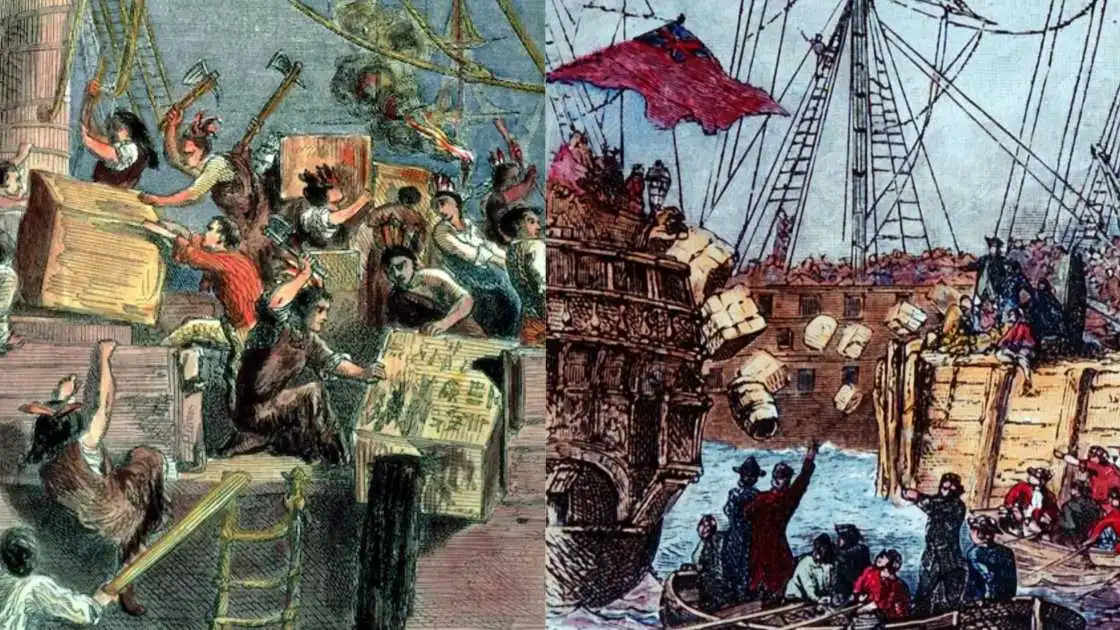
Have you ever gotten so mad about a rule that you just wanted to yell? Imagine if that rule was about your favorite drink. Well, a long time ago, in a place called Boston, some people got very angry at the people in charge across the ocean. They were angry about taxes on tea. They didn't just write a letter about it. They did something that would be remembered forever. Let's dive in and talk about that cold December night when a bunch of men dumped a whole lot of tea into the water. This article will explore Boston Tea Party, why it happened, and why we still talk about it today.
What Was Life Like in Boston Before the Big Tea Party?
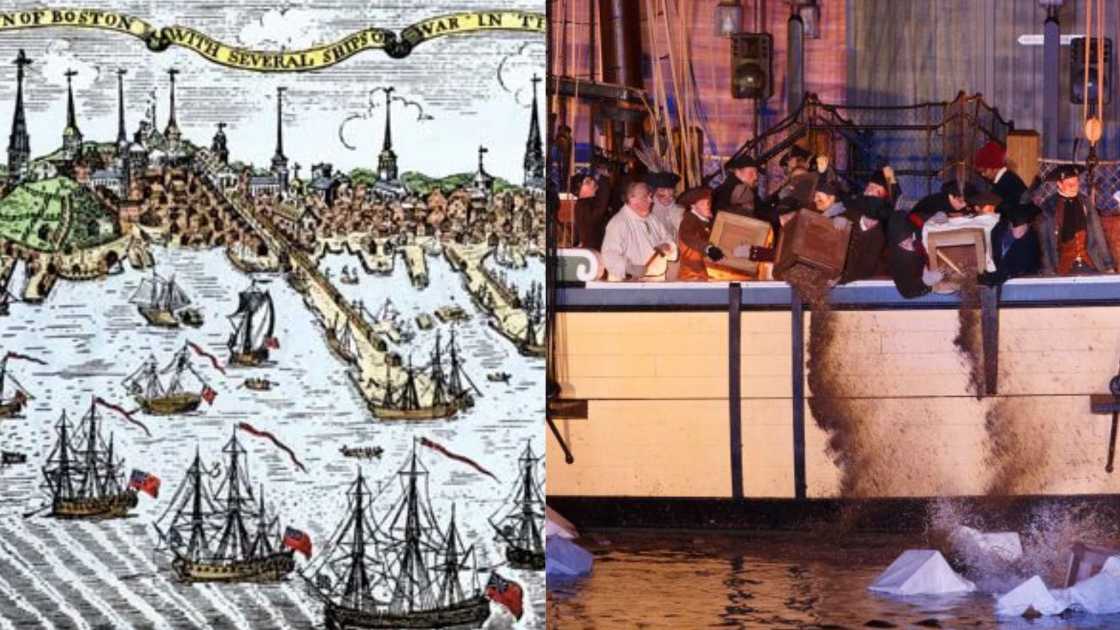
Before the tea hit the water, life in Boston was not exceptionally fun for the individuals living there. They were called colonists. This implies they lived in America, but a faraway nation called Awesome Britain was in charge of them. The lord of Incredible Britain and his pioneers made all the rules. The colonists did not get to vote for these pioneers. They had no one to talk for them. This made them feel like they had no say in their claim lives.
The greatest issue was cash, or charges. Incredible Britain had battled a enormous war and required cash. They chosen the colonists ought to pay for it. So, they begun making unused rules that put charges on things like paper, glass, and paint. The colonists thought this was out of line. They had a celebrated saying: "No tax assessment without representation." This fair implies, "Do not make us pay charges if we do not get a voice in your government."
Then, a modern run the show came along that let a huge British company offer tea straightforwardly to the colonists. This tea would be cheaper, but it still had a little charge on it. The pioneers in Incredible Britain thought this was a shrewd thought. They thought, "The colonists will like the cheap tea, and they will pay the charge without indeed considering approximately it." But they were off-base. The colonists saw it as a trap. They thought if they paid this assess, indeed a little one, it implied they concurred to let Awesome Britain charge them until the end of time. They chosen they would not purchase or drink this tea.
Read Also: How Did John Lewis Affect Brown Vs Board Of Education
Who Were the "Sons of Liberty"?
This gather of irate colonists required pioneers. They found them in a mystery bunch called the Children of Freedom. These were standard men like businesspeople, printers, and specialists. One of the most celebrated pioneers was Samuel Adams. He was exceptionally great at getting individuals to concur with him. Another was John Hancock, a wealthy man who possessed ships. These men did not need to utilize huge armed forces at to begin with. They needed to utilize challenges to appear they were angry.
The Children of Freedom were extraordinary at arranging. They would put up signs around town and spread news by word of mouth. They made beyond any doubt everybody knew approximately the unjustifiable charges. They regularly met in mystery places, like the back rooms of bars (which are like old-time coffee shops that served lager), to conversation approximately what to do following. They needed to make beyond any doubt the tea ships never got to offer their tea. They stood protect at the docks to make beyond any doubt no one emptied the tea. They told the dispatch captains to turn around and go back to Britain. But the representative of Boston, who worked for the lord, said the ships had to remain and pay the assess. This made a enormous issue. The ships fair sat in the harbor, full of tea, and no one knew what would happen next.
The Night of the Big Protest: December 16, 1773
The day of choice was December 16th. Thousands of individuals swarmed into a enormous assembly house in Boston. They were holding up to listen the last word. Would the senator let the ships take off? A delivery person was sent to inquire him one final time. The swarm held up and held up. At long last, the delivery person came back with the news. The representative said no. The ships may not take off until they paid the tax.
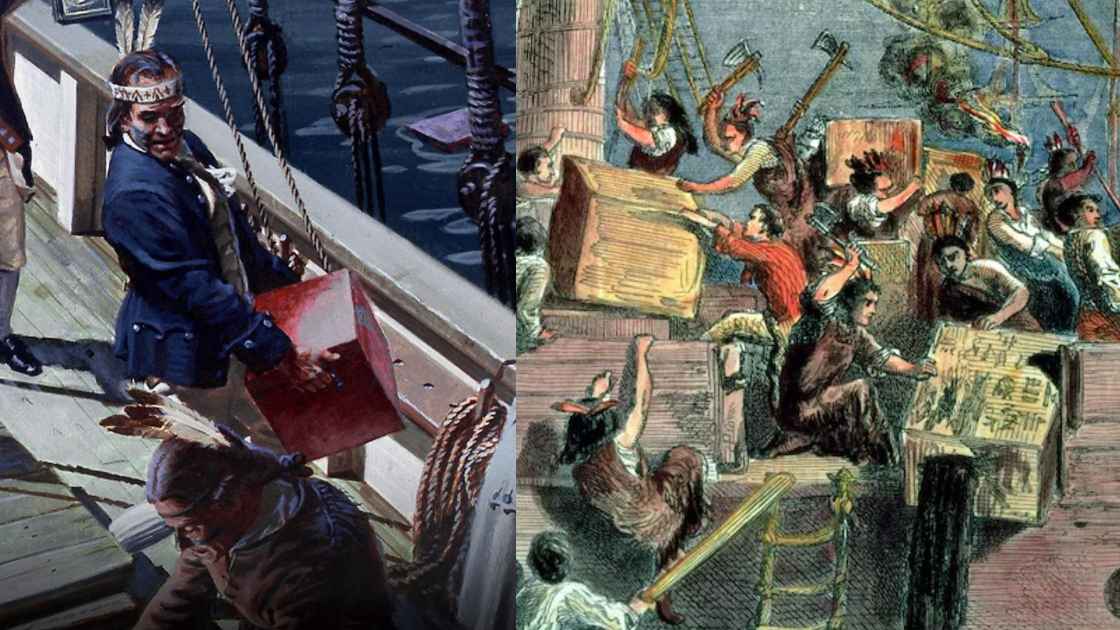
The swarm got exceptionally disturbed. Right after the flag-bearer gave the news, a uproarious war whoop was listened from exterior. It was a flag. A bunch of men, numerous of them Children of Freedom, had been getting prepared. They had dressed up exceptionally rapidly as Mohawk Indians. They utilized covers and put sediment or paint on their faces. They did this to stow away who they were. If they got caught, they would be in tremendous inconvenience. So, they wore masks to mix in and not get recognized.
They walked down to the harbor where three ships were holding up: the Dartmouth, the Eleanor, and the Beaver. A enormous swarm of individuals taken after them to observe. It was a cold night, and the moon was out. The men boarded the ships. They worked exceptionally discreetly and rapidly. They told the dispatch specialists not to get in the way. At that point, they went to work.
What Did They Actually Do on the Ships?
This was not a senseless party. It was a exceptionally genuine and organized dissent. The men knew precisely what they were there to do. They went down into the hold of the ships where the tea was put away. The tea was stuffed in enormous wooden boxes called chests. Each chest was heavy.
The men opened the chests utilizing apparatuses like tomahawks and hatchets.
They at that point dumped all the tea clears out into the cold water of the Boston Harbor.
They were exceptionally cautious. They did not need to harm anything else on the ships. One story says a man attempted to take a few tea for himself, and the others ceased him. They were not there to take. They were there to send a message. In approximately three hours, these men had dumped 340 chests of tea into the water. That is a entirety parcel of tea! When the sun came up the following morning, the harbor was full of tea clears out coasting on the water.
How Did People React to the Tea Party?
The news of what happened spread exceptionally quick, like a fire. In Boston and other towns in Massachusetts, numerous individuals were cheerful. They cheered for the Children of Freedom. They saw it as a courageous stand against an unjustifiable run the show. They felt glad that somebody at long last did something huge. They thought it would appear Extraordinary Britain that the colonists would not fair take after each rule.
But not everybody was upbeat. A few colonists were frightened. They stressed that Incredible Britain would be exceptionally, exceptionally irate. And they were right to be frightened. A few individuals thought the men had gone as well distant. They accepted in challenging, but wrecking property was a distinctive thing. They were perplexed of what would happen next.
Across the sea in Incredible Britain, the lord and the pioneers were angry. They seem not accept what the colonists had done. The lord, Lord George III, was particularly irate. He thought the colonists were being awful and ill bred. The pioneers in Parliament, which is like their government, chosen they had to rebuff Boston and all of Massachusetts. They needed to make an illustration of them so no one else would get any ideas.
You May Also Like: International Space Station Predecessor: The History Before the ISS
The Punishment: The "Intolerable Acts"
The discipline from Extraordinary Britain was cruel. The pioneers passed a set of unused laws that the colonists called the "Terrible Acts." This implies the laws were so awful, they seem not be endured or accepted.
One of the unused laws closed the harbour of Boston. No ships may go in or out. This implied no nourishment or supplies might come in by dispatch, and no one in Boston might offer the things they made. It was like putting the entirety city in a timeout, and it harmed everybody, not fair the men who dumped the tea.
Another law said that Extraordinary Britain would have indeed more control over the government in Massachusetts. Town gatherings, where the colonists made choices, were presently intensely limited. The colonists felt like their opportunity was being taken absent piece by piece. Instep of making the colonists say too bad, these unforgiving disciplines fair made them indeed angrier. It pushed other colonies, like Modern York and Virginia, to feel too bad for Boston and need to offer assistance. They begun to see that they were all in the same watercraft. This was a huge step toward them all working together.
Why Is the Boston Tea Party So Important Today?
The Boston Tea Party was not the conclusion of the story. It was a exceptionally imperative starting. It appeared that the colonists were willing to take enormous dangers to stand up for what they accepted in. It was a capable image of challenge. The act of dumping the tea was a way of saying, "We have had sufficient, and we will not be pushed around anymore."
Because of the Unfortunate Acts, the colonies chosen to work together. They sent pioneers to a enormous assembly called the To begin with Mainland Congress. They talked approximately how to react to Extraordinary Britain as one gather. This was a gigantic step. Some time recently, each colony for the most part stressed approximately itself. Presently, they were beginning to act like one country.
All of this outrage and contradiction in the long run driven to something indeed greater: the American Progressive War. The Boston Tea Party is recalled as one of the key occasions that begun the war. It is a story approximately individuals who felt they were being treated unreasonably and chosen to do something almost it. It reminds us that standard individuals can come together and make a enormous distinction, indeed if it implies doing something as strong as tossing a entirety parcel of tea into the ocean.
Frequently Asked Questions
Did they really have a party with tea and food?
No, it was not a party like a birthday party. The title "Tea Party" came afterward. That night, the men were exceptionally genuine and centered. They worked rapidly to dump the tea. They did not sit around drinking tea or eating cake. The title "party" might make it sound fun, but for them, it was a genuine act of challenge against a run the show they hated.
What happened to the men who dumped the tea?
No one was ever caught and rebuffed for really dumping the tea. The men were exceptionally cautious to cover up who they were with their camouflages and the cover of night. Too, numerous individuals in Boston bolstered them and would not tell the British who they were. The British pioneers were so irate that they rebuffed the entirety city of Boston instep of attempting to discover the particular men.
Was all that tea expensive?
Yes, the tea was worth a part of cash. History specialists think the 340 chests of tea would be worth more than one million dollars in today's cash. That is a part of cash to toss into the water! It appears how unequivocally the colonists felt approximately the charge. They were willing to crush something exceptionally important to demonstrate their point that they would not be treated unreasonably.