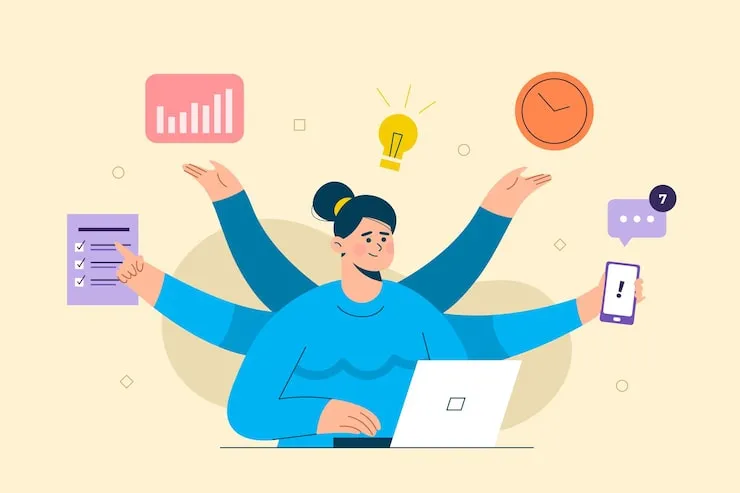
Have you ever looked at all the things that you have to do with a deadline on each one of them like your homework, chores, and school/college obligations and felt extremely lost? You might also ask yourself, "What must I do first? What is most important? Will I get the job done on time?"
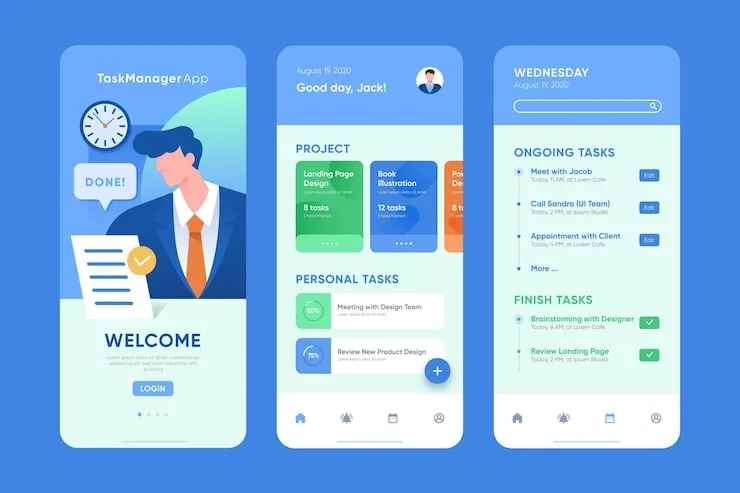
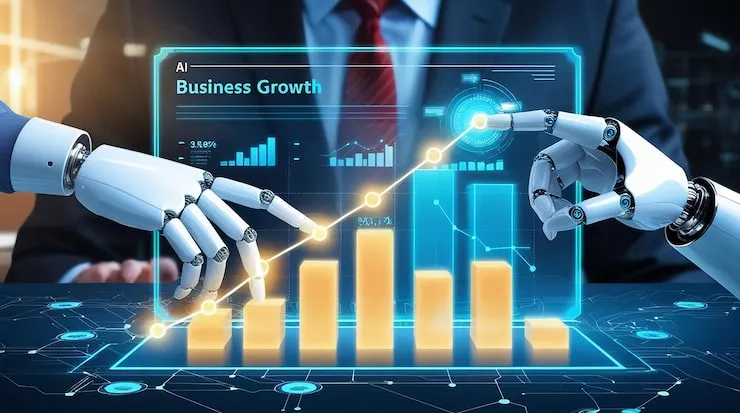
In the adult work world, people have the same problem, but with much bigger lists! They use a tool called Task Manager to keep track of everything. For a long time these were just digital lists or spreadsheets – like a fancy notepad. But now a major change is taking place with artificial intelligence (AI). AI Driven Task Management super smart. It's like turning an ordinary notepad into a useful, thoughtful robot. This robotic assistant changes the workflow. A workflow is simply the step-by-step path you take to complete a large task.
This article will show you how AI gives us new "superpowers" that make work easier, faster and much less stressful.
Read Also: How to Choose the Best Task Management Tool for Your Team
The Big Idea: From Dead Lists to Living Helpers
Before AI, if you were a manager, you had to do a lot of boring work yourself. If a large project was delayed, you had to manually change the due dates for dozens of related tasks. You had to send an email to everyone. It was slow and you made mistakes often.
AI changes this completely. It transforms a static, dead inventory into a living system.
This AI system learns from each task completed so far. It not only contains information; It uses this to make smart predictions and help you. Instead of just showing you a list, AI is always checking, fixing and sorting things so your team can focus on the work.
The goal of this change is simple: Stop wasting time on small, administrative tasks, so you can spend your time on big, creative ideas.
AI’s Four Superpowers for Getting Work Done
The new way of running is based totally on four exceptional matters AI can do that humans cannot do as quick or accurately.
Superpower 1: Smart sorting (sensible prioritization)
Imagine you've got 3 duties:
- Empty the trash (deadline today).
- Study for a big test worth half your grade (due tomorrow).
- Help a friend with simple homework (delivered next week).
A routine to-do list simply tells you to empty the trash first because the due date is today. But is this really the most important thing? No! The exam is most important as it has the biggest impact on your future.
AI Task Manager is smart sorter. It doesn't just look at the due date.
- It looks at importance: It examines which task helps the company the most. A task that brings in new money is more important than a task that organizes a folder.
- It checks the connection: If three different projects are waiting on a document, the AI knows that the document is now the most important task of all, even if the original deadline is far away.
- It looks at your day: the AI knows that you write best in the morning. This will put a complex writing task at the top of the list at 09.00. It knows that your energy usually wanes after lunch, so it saves simple copy and paste tasks for 6 p.m. 2 p.m.
AI gives each task a priority score. This approach that while you have a look at your list, the primary item is absolutely what you ought to be doing right now to make the largest difference.
The Automatic Note-Taker (Automation)
How much time do you spend writing notes or sending updates about what you just did? Too much! This is known as "the boring" and it slows everyone down.
AI is brilliant at doing this tedious work automatically. It acts as a fast, tireless robot that handles small, repetitive tasks.
- Automatic assignment creation: Someone emails you and says, "Can you finish the report by Friday?" You don't have to stop what you're doing, open the task manager, enter the task and set the date. The AI reads the email, creates the task immediately, sets a Friday deadline and links the email to it - all in a second.
- Automatic updates: Instead of writing status reports every Friday, AI only sees what your team has checked into the system. It writes its own reports, tells the boss what has been completed, and reports any problems.
- Automated Routing: If a customer sends an email saying “I can't log in,” AI knows immediately that the right person to fix it is a login expert. This sends the task directly to that person, bypassing managers and saving hours of back and forth emails.
This function allows workers focus on making things, not simply handling office work approximately making matters.
The Fortune Teller (Predictive Planning)

Imagine you are planning a journey. You use a smart map app that now not most effective tells you the contemporary traffic; It looks at what site visitors is normally like at 5pm on a Friday and warns you earlier than you depart that you'll stumble upon a massive queue.
AI task managers do the same for projects. They are like prophets for your work. They use past data to predict problems before they occur.
- Delay prediction: A task should take 10 hours. After four days, the AI sees only 2 hours of work completed. The AI knows that this task is now in jeopardy. This sends a warning to the manager: "This job is at risk!" This sends a caution to the manager: "This activity is at danger!" This offers the team a chance to restore the trouble before the deadline.
- Burnout prediction: If the gadget sees that a group member has been assigned 5 large, difficult duties in a unmarried week, it will boost a flag. It says to the supervisor, "This man or woman goes to be beaten." This helps managers move tasks forward and keeps the team happy and healthy.
This foresight is AI's best victory. This actions the team from reactive (fixing mistakes when they arise) to proactive (stopping mistakes before they start).
You May Also Like: Task Management Software for Startups: Benefits & Best Picks
The Fair Boss (Smart Resource Allocation)
Sometimes, in a collection assignment, one student does all of the work at the same time as the opposite sits back. This is unfair and leaves the scholar exhausted and disillusioned within the first location.
The AI-powered system is Fair Boss. This ensures that the work is shared equally and intelligently.
- Balanced workload: When a brand new task comes in, the AI exams every person's listing. This indicates that Sarah has forty hours of work this week and John has best 10 hours. This assigns John new work to ensure that the weight is balanced.
- Skill matching: If a task requires very specific skills, such as “fixing a company website,” the AI checks who has the most experience with the website. This sends the paintings immediately to the person who can do it nice and quicker, saves time and ensures high satisfactory.
By dealing with the workload on this way, AI Driven Task Management ensures that the proper individual gets the proper assignment at the right time
The New Role of the Human Worker
With AI handling all prioritization, planning, tracking and basic administration tasks, what is left for humans? Man's work is much more important and interesting now!
Workflow for people is changing in three major ways:
- From typing to talking: You will not waste time clicking menus and filling out forms. You really tell the AI what you need: "Hey AI, schedule a follow-up meeting about the budget next week." AI does the writing and planning. Your job is just to express your idea or intention.
- From control to direction: Managers no longer spend all day checking everyone. They focus only on the problems posed by AI – the few tasks that are “at risk”. They become high-level executives who oversee smart systems, not just paperwork.
- From doing boring work to being creative: The time AI saves is time you can spend solving complex problems, generating new ideas or spending more time talking to customers. AI takes care of the robot's work, and you focus on the human work - things that require emotion, judgment and deep thinking.
Conclusion: How to start working with AI
AI-powered assignment management would not should be frightening. It's not looking to eliminate jobs; It attempts to eliminate the uninteresting elements of jobs. It's a collaboration tool that helps people work together better than ever.To welcome this smart new assistant into your workflow, just remember these simple steps:
- Determine pain points: Show the AI device where you or your group war the most (eg “We are usually late with our monthly reports.”).
- Start small: Don't try to alternate the entirety straight away. Start using an AI characteristic like automatic meeting summaries.
- Help it learn: If the AI gives you some smart suggestions you disagree with, tell us why! The AI gets smarter every time you give feedback.
By learning to work with this smart technology, we make our jobs better, our teams more organized and make working life easier and more focused. This is how AI is truly changing workflows – by putting people first.