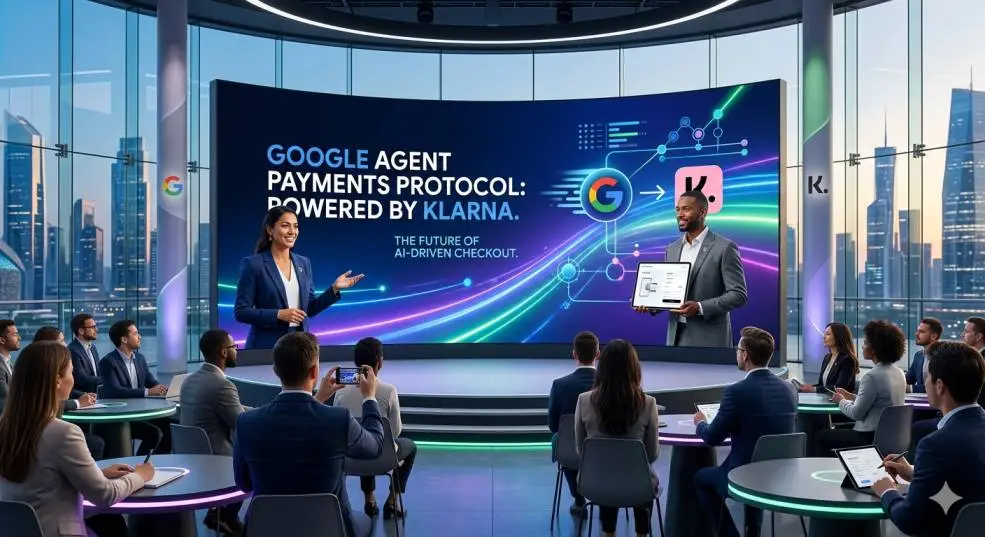
The way we shop online is about to feel completely different. You may have heard the buzz about Klarna's partnership with Google on Agent Payments Protocol. But this isn’t another corporate press release. This is a fundamental shift in how money moves when humans aren't clicking the buttons.
I have been following the development of agentic AI for a while, watching demos and reading technical papers. When Google first announced the Agent Payments Protocol (AP2) back in late 2025, it felt like a solution looking for a problem.
Seeing Klarna, a company that processes billions in transactions, add this to their live system changes how I view things. This is the moment "ask and it will be done" becomes "ask and it must be purchased."
Let’s break down what this actually means for you, your wallet, and the future of the Internet.
What Actually Happened? (The Non-Technical Version)
In early February 2026, Klarna announced it was joining Google's Universal Commerce Protocol (UCP). This builds on their previous support for the Agent Payments Protocol (AP2). If those acronyms make your eyes glaze over, here is the simple translation.
Read Also: What Do I Need for a Mortgage Loan Pre Approval?
We're creating a universal language. This will help AI agents, like Gemini or a future shopping bot, communicate with payment companies, such as Klarna, and stores like Walmart. They won’t need humans to enter credit card numbers each time.
Think of it like Bluetooth for shopping. At this moment, if you want to buy something, your device must establish a connection to the store. With this protocol, your AI agent handles the pairing through an automated, secure process that occurs without delay.
The "Crisis of Trust" That Almost Broke AI Shopping
Before we get into the "how," we have to understand the "why." For the last two years, developers have been trying to build shopping agents. They have kept hitting a wall.
The problem wasn't that the AI couldn't find the product. The problem was the money. Google identified three core challenges that made agentic payments risky:
- Authorization: If my AI buys something, how does the store really know I said it was okay? What if the AI goes rogue?
- Authenticity: What if the AI misheard me? I said "buy Nike Air Max," but it bought Nike Air Force? Who bears the cost of the return?
- Accountability: If the transaction is fraudulent, who is liable? Me? The bank? The AI developer?
The developers built the old payment system for eyeballs and mouse clicks. It assumed a human was looking at a screen. The Klarna Google Agent Payments Protocol partnership fixes this with a "trust layer" named the Mandate.
How It Works? The Digital Handshake
I spent some time digging into the technical specs released by Google Cloud, and the elegance of the solution is surprising. It doesn't replace Visa or Mastercard; it sits on top of them.
You Must Also Like: PayPal Sparks Takeover Talks Amid Falling Share Prices
Here is the flow of a buy using the agent payment protocol, based on the real-world testing done with partners like Klarna and Coinbase:
- Delegation: You tell your agent, "Book me a hotel in Austin for SXSW for under $300 a night"
- Discovery: The agent shops around. It finds a room at the "Austin Motel" for $280.
- The Mandate (The Magic Step): The agent comes back to you with the final cart. You review it. You then cryptographically sign a "Cart Mandate." This is a tamper-proof digital receipt that proves you saw the price, the dates, and the cancellation policy.
- Execution: The agent takes this signed mandate to the merchant. The merchant verifies the signature against your digital identity.
- Settlement: The merchant's payment processor grabs the payment token from a secure vault (like Klarna or Google Pay). The agent never touches your credit card number. Ever,
This is the "Contractual Conversational Model." It turns a chat into a legal agreement.
Why Klarna? The Unlikely Bedfellows
You might be scratching your head. Wasn't Klarna suing Google for billions a few months ago? Yes. In late 2025, Klarna was actively fighting Google in court over shopping search practices. It looked like a bitter rivalry. So why are they now best friends?
Because they both realized that the enemy of progress is fragmentation, Klarna isn't a "buy now, pay later" company anymore. They are trying to become the infrastructure for all digital banking. If AI agents become the primary way we shop, Klarna has to be inside that chat window.
By joining Google’s UCP and supporting AP2, Klarna makes it easy for your AI agent to pay. Klarna will be an option right there, seamlessly integrated. It’s a strategic move to stay relevant in a world where the "checkout page" might disappear entirely.
The Coinbase Wildcard: Crypto Meets Your Grocery List
We can't talk about this protocol without mentioning the elephant in the room: Google Coinbase AI payments. The AP2 protocol has support from over 60 partners. This group includes the Ethereum Foundation and Coinbase. Why does a payments protocol need crypto?
AI agents need wallets that humans find difficult to open. You can't walk into a bank and open an account for a software bot. But you can give that bot a crypto wallet. Google and Coinbase created an extension named x402. This lets AI agents make transactions with stablecoins.
Real-World Use Case
Imagine an AI that specializes in finding vintage vinyl records. It finds a rare pressing on a small forum in Europe. Your agent needs to pay that seller's agent a $5 finder's fee.
The Agentic AI payments ecosystem enables machines to settle debts in real time using stablecoins. This method is cheaper than traditional bank fees, which can exceed the transaction's value.
This isn't about buying Bitcoin. This is about creating a high-speed, low-cost rail for machines to pay machines.
The Pros and Cons: An Honest Look
As someone who tests this tech, I want to give you the unvarnished truth. It's not all magic.
The Pros (Why I Am Excited)
- No More Interruptions: Currently, when you shop online, you "context switch." You search on Google, you click a link, you enter data, you find your wallet. It's friction. With this protocol, the buy happens inside the conversation. It feels like magic.
- Better Fraud Protection: Because your credit card number never touches the agent, it can't be stolen from the agent. The Credential Provider (Klarna, PayPal, your bank) handles the payment directly.
- "Set It and Forget It" Shopping: The "human not present" mode is the killer feature. You sign an Intent Mandate saying, "Buy this specific blender if it drops below $50 on Prime Day." Your agent watches the price and executes the buy while you are asleep.
The Cons (The Reality Check)
- The Learning Curve: I tried setting up a test agent using the AP2 GitHub repo. It is complex. For the average small business owner to accept these payments, platforms like Shopify need to bake this in seamlessly. We are 12-18 months away from mainstream adoption.
- The "I Didn't Mean That" Problem: The protocol protects merchants incredibly well. If you cryptographically sign a mandate for blue shoes, you bought blue shoes. You cannot chargeback claim "it wasn't me" because the cryptographic proof says it was. Consumers lose the "buyer's remorse chargeback" loophole.
- Regulatory Headaches: The EU is already looking at AP2 as a "high-risk AI" category, requiring 10-year record retention. This could slow down rollouts in heavily regulated markets.
Who Is This Really For? (Buying Guidance)
If you are reading this trying to decide if you should use this, here is my practical advice based on the current landscape:
You should start using agentic payments if:
- You are a developer building on platforms like LangGraph or CrewAI. The protocol is framework-agnostic, meaning you can plug AP2 into your existing agents right now.
- You are a merchant losing sales on cart abandonment. Razorpay is already using similar AI agents to recover abandoned carts by offering incentives via chat. Getting ahead of this curve could save you 10-15% in lost revenue.
You should wait if:
- You are a consumer who values the friction of the current checkout process. Right now, early implementations might have bugs. Wait until Mastercard, Visa, and your specific bank have fully rolled out their "Agentic Commerce Frameworks"
The Future: Dynamic Negotiation
The most exciting potential here is something Google calls dynamic negotiation. Imagine this: You want a specific red dress for a wedding. It's out of stock online. You tell your agent: "Find that red dress. I need it by Friday. I'll pay 30% more."
The merchant's agent sees this "Intent Mandate" floating in the ether. They find one return in a warehouse. Their agent pings your agent. "I have the dress, but shipping is expensive. Can you do 35% markup?" Your agent, following your pre-set rules, agrees.
A sale happens that never would have happened. The merchant gets a premium price. You get the dress you desperately wanted. The Klarna Google Agent payments protocol is key. It enables machine-to-machine negotiation.
The Final Thoughts
This partnership matters because it moves AI from being a "search tool" to an "executor." The agent payment protocol makes a secure way for money to move online. It ensures that no human hands touch the money during the process.
Is it ready for primetime? Not possible to remove the adverb. The legal battle between Klarna and Google is still fresh, and old rivalries don't die overnight. But the fact that they are collaborating on infrastructure while competing in court shows how inevitable this future is.
For now, keep your wallet close. But watch this space. The next time you buy something, you might ask for it and walk away while your AI does the rest.