
Let's talk about buildings. You see them every day. Some are homes where families live. Others are offices or shops where people work. These two types are called residential and commercial real estate. It's like comparing apples and oranges. They look different, are used differently, and cost differently. If you've ever thought about buying property, knowing this split is your first step. It's not too tricky. Let's break it down together in simple words.
What is Residential Real Estate?
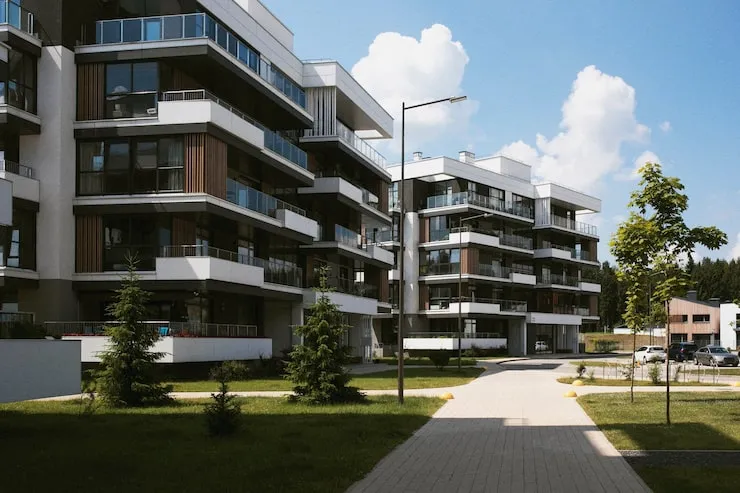
This is all approximately homes. If a building is made for individuals to live in, it's private. Think almost the house your family lives in. That's it. It's a private space for eating, resting, and the difference between residential and commercial real estate.
- Made for Living: Its fundamental work is to be a home.
- For Individuals: It's for people and families, not companies.
What is Commercial Real Estate?
This is all almost commerce. If a building is utilized to make cash or run a company, it's commercial. Your favorite pizza shop, the shopping center, or a huge office tower downtown are all illustrations. These places are approximately work and sales.
- Made for Commerce: Its fundamental work is to offer assistance a trade run.
- For Companies: It's bought or leased by commerce owners.
So, the greatest distinction is right in the title. Private is for inhabitants (individuals living there). Commercial is for commerce (trade happening there). Presently, let's see at all the other ways they are not the same.
Read Also: Top 7 Affordable Family Neighborhoods in Atlanta GA 2026
Who Lives There and Who Works There?
This is the most effortless way to tell them separated. See at who employments the building each day. For a home, the clients are the individuals who live there. They are called inhabitants or mortgage holders. They sign a rent or pay a contract to live in the space. The relationship is regularly individual. A proprietor might know their inhabitants well. The rules are ordinarily around calm hours, keeping the put clean, and difference between residential and commercial real estate.
For a commerce property, the clients are a company and its workers or clients. A trade proprietor, called a inhabitant, rents the space to run their shop or office. The assention is all almost commerce. The proprietor talks to the trade proprietor, not the representatives. The rules center on things like commerce hours, store signs, and how numerous clients can visit. So, a home is for private life. A commerce property is for open commerce. One is individual, the other is professional.
How the Money Works: Loans and Buying Power?
Buying these two sorts of property is exceptionally diverse. The banks see at them in isolated ways.
When you purchase a house, you get a domestic advance. This is called a contract. Banks make this prepare beautiful standard. They see at your individual salary, your work history, and your individual credit score. The down installment can be moo, in some cases as moo as 3-5%. The advance keeps going a long time, like 15 to 30 a long time. The intrigued rates are as a rule lower.
When you purchase a trade property, you get a commercial advance. This is much stricter. Banks see this as a greater hazard. They see for the most part at the property itself. Is it a great shop in a active zone? They moreover see at the trade that will lease it. They need to see its money related history. The down installment is much higher, regularly 20% to 35%. The advance term is shorter, like 5 to 20 a long time. The intrigued rates are higher.
In brief, buying a domestic is approximately you. Buying a commerce property is approximately the property's money-making potential.
Making Money: Renting It Out
People purchase both sorts of property to make cash from lease. But how lease is paid and concurred upon is not the same.
For a house or loft, lease is straightforward. A inhabitant pays one settled sum each month. This covers their right to live there. The rent understanding is ordinarily for one year. The proprietor pays for property charges, protections, and repairs. Raising the lease can be precarious and has rules to ensure tenants.
For a trade property, lease can be more complex. There's a common demonstrate called "Triple Net Rent" or "NNN." Here, the lease is lower, but the trade occupant moreover pays for three additional things: property charges, building protections, and upkeep. This is a enormous distinction. The rent is too much longer, frequently 5 to 10 a long time. This gives the commerce steadiness. The lease can moreover be tied to how much deals the trade makes.
So, private lease is level and basic. Commercial lease can be a bundle bargain with more obligation for the tenant.
Rules, Rules, Rules: Understanding the Law
Every building has rules. For homes and trade properties, the rulebooks are totally different.
Homes are secured by solid occupant security laws. These laws make beyond any doubt everybody is treated reasonably. They control how much a security store can be, how to handle removals, and rules for raising lease. These laws are outlined to secure people's right to a secure and steady home.
Business properties work beneath contract law. This implies the rent assention is the primary rulebook. There are less government assurances for the trade occupant. Everything is debatable between the proprietor and the commerce proprietor: who fixes the discuss conditioner, who cleans the stopping part, who pays for what. It's all composed in the rent. It's more "buyer beware."
Think of it this way: leasing a domestic has a part of security nets. Leasing a shop is more like a commerce handshake, with all subtle elements in writing.
Looking After the Property: Maintenance and Upkeep
Who fixes a broken window or a defective roof? The reply changes based on the property type.
In a domestic, the proprietor is nearly continuously dependable for repairs and upkeep. If the radiator breaks, the inhabitant calls the proprietor to settle it. The proprietor handles garden care, portray, and enormous repairs. This is a major portion of being a private landlord.
In a commerce property, particularly with a Triple Net Rent, the occupant frequently handles support. They might be dependable for settling their possess space, cleaning, and indeed repairs to the roof or structure. The proprietor oversees the greater picture, but the day-to-day care falls on the commerce. This is since the commerce is utilizing the space in a particular way.
So, for a domestic, the proprietor is like a caretaker. For a commerce property, the inhabitant is regularly in charge of keeping their possess store running.
The Big Picture: Risk and Reward

Investing in property is approximately hazard and compensate. How do these two compare?
Residential Real bequest is by and large seen as steady and lower hazard. Individuals continuously require a put to live. It's simpler to discover a modern occupant if one moves out. The credits are less demanding to get. But, the rewards can be slower. Property values and rents go up consistently over time.
Commercial Real domain can offer higher rewards. The lease you collect is more often than not much higher. The leases are longer, giving you steady wage for a long time. Inhabitants regularly take care of the property. But, the chance is higher. If a trade falls flat, it can be difficult to discover a unused one, particularly for a exceptionally particular shop. The property can sit purge for a long time. You require more cash to start.
It's a trade-off. Homes are a steadier, slower way. Trade properties can be a greater win but come with greater challenges.
You May Also Like: Mortgage Recasting Vs Refinancing Comparison: Key Differences, Pros, Cons, and Costs Explained
How Do You Decide What's Best For You?
So, how do you choose? It depends on your objectives, your cash, and how much work you need to do. Choose private Real domain if you are fair beginning out. It's great if you need a less difficult way. It's right if you have a littler sum of cash spared. It works if you need to oversee the property yourself and do not intellect occupant calls.
Choose commercial Real bequest if you have more encounter. It's great if you have a bigger sum of cash to contribute. It's right if you need higher pay and like the thought of long-term commerce bargains. You require to be comfortable perusing complex leases and understanding trade needs. Many financial specialists begin with homes to learn. At that point, they might move to trade properties afterward to develop their income.
FAQs
1. Which one makes more money, residential or commercial property?
Commercial property frequently has the potential for higher wage. The lease is higher, and occupants sign longer leases. But, it too costs more to purchase and can be more hazardous. Private property is more steady and dependable, but the wage is ordinarily lower. Think of it like a reserve funds account (private) versus a stock (commercial). One is more secure, the other has a chance to develop more.
2. Can I live in a commercial property?
Almost never. Zoning laws are exceptionally strict around this. Arrive is zoned for a reason. A put zoned for trade cannot be utilized as a full-time domestic. It is against the law. In some cases individuals live in the back of their shop, but this requires uncommon grants. Continuously check the zoning rules first.
3. Is it harder to get a loan for commercial real estate?
Yes, it is much harder. Banks see it as a greater hazard. They need a greater down installment, some of the time 30% or more. They see closely at the property's salary history. They moreover see at your trade encounter. A domestic credit is based on your individual work and credit. A commercial advance is based on the property's capacity to make money.
Wrapping It Up
We secured a parcel, but it truly comes down to a straightforward thought. Private Real bequest is almost individuals and homes. Commercial Real bequest is around trade and money. Homes are for living. They have easier credits, less demanding rules, and are overseen day-to-day by the proprietor. Shops and workplaces are for working. They have complex credits, business-focused leases, and frequently put the occupant in charge of upkeep.
Your choice depends on what you need. Do you need a unfaltering, easier venture? See at houses. Do you need a higher-income, business-minded venture? See at commercial spaces. The best financial specialists get it both sides. They know their claim objectives and choose the way that fits. Now you have a clear picture. You know the key contrasts in who employments them, how to pay for them, and how the rules work. This information is your to begin with step. It makes a difference you conversation to operators, get it advances, and make a shrewd choice for your future.