Choosing a new car today is different than it was ten years ago. You no longer just pick between different gas cars. Now, you have to decide how much electricity you want to use. The two biggest choices are the PHEV (Plug-in Hybrid Electric Vehicle) and the full EV (Electric Vehicle).
If you are looking for a new ride, you might feel confused. Should you go all-in on a battery? Or should you keep a gas engine just in case? This guide will help you understand the core differences, costs, and pros and cons of each.
What is a PHEV, and what is a full EV?
Before we look at the costs, let's define what these cars actually are.
The Full EV (Electric Vehicle)
A full EV has no gas engine at all. It runs entirely on a large battery and one or more electric motors. You charge it by plugging it into a wall outlet or a public charging station. Since there is no gas, there is no tailpipe and no exhaust.
You may also read :- MG Majestor Launch Date India: Everything You Need to Know
The PHEV (Plug-in Hybrid)
A PHEV is a middle ground. It has a battery and an electric motor, but it also has a gas engine. The battery is smaller than a full EV battery. Usually, a PHEV can drive for 20 to 50 miles on electricity alone. Once that power runs out, the gas engine turns on, and the car acts like a regular hybrid.
Phev Plug-In Hybrid vs a Full EV SUV: The Size Factor
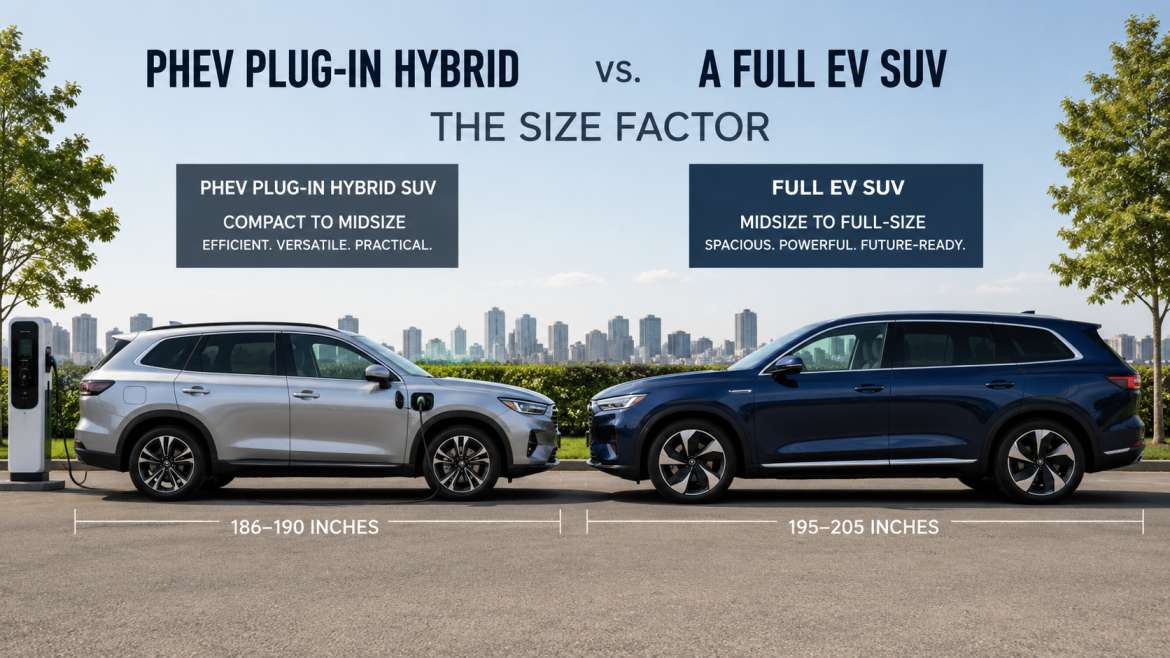
Many families prefer SUVs because they offer more space and safety. When comparing a PHEV plug-in hybrid vs a full EV SUV, the choice often comes down to how you use the vehicle.
- PHEV SUVs: These are great for families who do short school runs or grocery trips on electric power but want to take long road trips without stopping to charge for an hour.
- Full EV SUVs: These offer a lot of storage space (sometimes even a "frunk" or front trunk) and very fast acceleration. However, they are usually heavier and more expensive than the PHEV versions.
EV vs PHEV Maintenance Costs
One of the best reasons to switch to an electric car is to save money on repairs. However, the costs are not the same for both types.
Maintenance for Full EVs
Full EVs are very simple. They do not have oil, spark plugs, timing belts, or mufflers. This means you never need an oil change. The main things you need to maintain are the tires, cabin air filters, and windshield wiper fluid. Because they use "regenerative braking" (where the motor slows the car down), the actual brake pads last much longer than on a gas car.
Maintenance for PHEVs
PHEVs are more complex. Because they have both an electric system and a gas engine, they have more parts that can break. You still need to pay for:
- Oil changes.
- Air filter replacements.
- Spark plug checks.
- Exhaust system repairs.
In short, a full EV is cheaper to maintain over time because it has fewer moving parts.
| Feature | Full EV | PHEV |
|---|---|---|
| Oil Changes | No | Yes |
| Brake Wear | Very Low | Low |
| Engine Repairs | None | Possible |
| Complexity | Simple | High |
Phev Plug-In Hybrid vs a Full EV: Pros and Cons
To make the best choice, you need to see the good and the bad of both sides.
Full EV Pros
- Zero Emissions: You never produce pollution while driving.
- Silent Drive: The car is extremely quiet.
- Lower Fuel Cost: Electricity is almost always cheaper than gasoline.
- Performance: EVs feel very fast when you press the pedal.
Full EV Cons
- Range Anxiety: You might worry about the battery dying on a long trip.
- Charging Time: It takes longer to charge a battery than to fill a gas tank.
- Upfront Cost: These cars are often more expensive to buy at the start.
PHEV Pros
- No Range Anxiety: If the battery dies, the gas engine keeps you going.
- Easy Fueling: You can use any gas station.
- Great for Commutes: If your work is 15 miles away, you might never use gas during the week.
PHEV Cons
- Small Electric Range: You can't go very far before the gas engine starts.
- Slower Charging: Many PHEVs cannot use "Fast Chargers" like full EVs can.
- Less Space: Having two power systems often takes up more room in the car.
Plug-In Hybrid vs Hybrid: Which is Better?
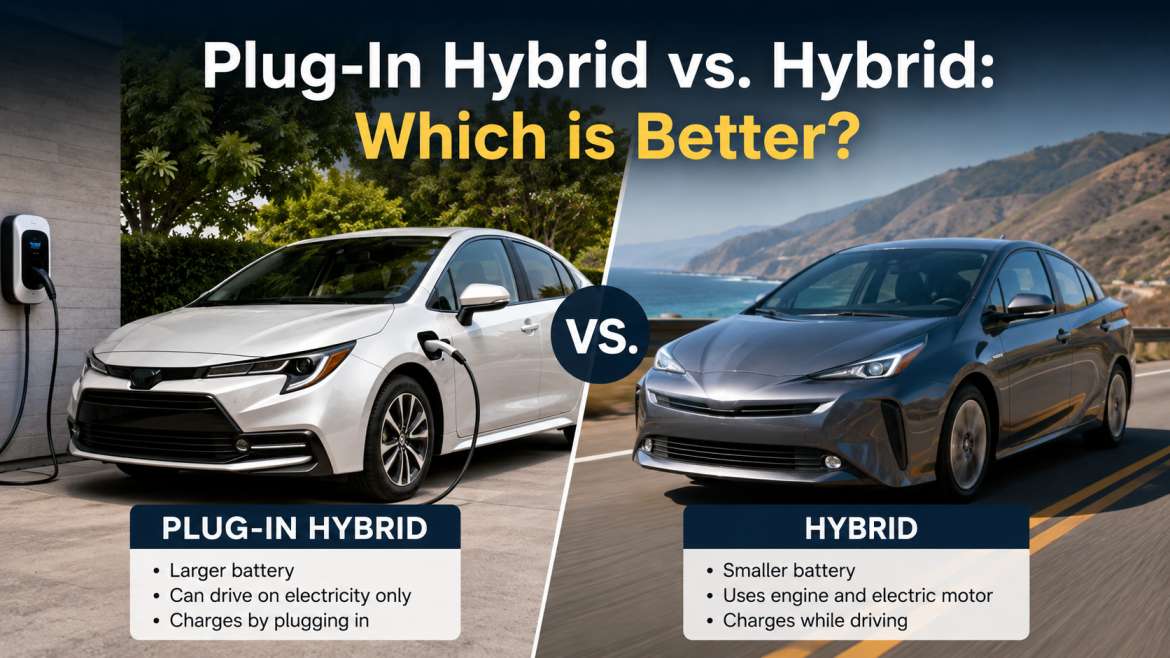
You might also see "standard" hybrids (HEVs). A standard hybrid like an older Toyota Prius cannot be plugged in. It charges its own battery using the gas engine and braking.
Why a PHEV is better than a standard hybrid: A PHEV lets you drive purely on electricity. A standard hybrid only uses the motor to help the gas engine. If you can charge your car at home, a PHEV will save you much more money on gas.
Why a standard hybrid might be better: If you live in an apartment and cannot plug in your car, a PHEV is not a good choice. You would be carrying a heavy battery around without using its full power. In that case, a standard hybrid is cheaper and easier.
Disadvantages of Plug-In Hybrid Cars
While PHEVs are a great bridge to the future, they have some specific downsides you should know about.
- Lower Efficiency on Highways: Once the small battery is empty, you are driving a heavy car with a gas engine. This often means your gas mileage on long highway trips is worse than a regular small gas car's.
- Double Maintenance: As mentioned before, you have to take care of two different systems.
- Weight: The combination of a gas tank, engine, and battery makes the car very heavy. This can affect how the car handles around corners.
- Reliability: Some studies show that because PHEVs are so complex, they can have more software or mechanical glitches than simpler Evs
Phev Plug-In Hybrid vs a Full EV Cost
When looking at the PHEV plug-in hybrid vs a full EV cost, you have to look at the "Total Cost of Ownership." This includes the price you pay at the dealer and the money you spend every month.
The Purchase Price
Full EVs usually have the highest sticker price. However, many governments offer tax credits or rebates to help lower this cost. PHEVs are usually a few thousand dollars cheaper than full EVs but more expensive than gas cars.
The Running Cost
If you drive a lot, the full EV wins. Charging a car at home at night is very cheap. If you drive a PHEV and forget to plug it in, you are just paying for gas, which is expensive.
Resale Value
In the current market, full EVs tend to hold their value well if they are from popular brands. PHEV value can drop faster because battery technology is improving so quickly that older PHEVs with very short ranges become less attractive.
EV vs PHEV vs HEV: The Quick Comparison
Here is how to tell them apart at a glance:
- EV (Electric Vehicle): 100% Electric. No Gas. Plug it in. Best for low running costs.
- PHEV (Plug-in Hybrid): Part Electric, Part Gas. Plug it in. Best for people who want one car that can do everything.
- HEV (Hybrid): Part Electric, Part Gas. Do not plug it in. Best for people who cannot charge at home.
Which One Should You Buy?
To help you decide, ask yourself these three questions:
1. Can you charge at home?
If the answer is no, do not buy a PHEV or a full EV. Buy a standard hybrid (HEV). Without a home charger, a PHEV is just a heavy gas car, and a full EV will be a headache to keep charged.
2. How far do you drive every day?
If you drive less than 40 miles a day, a PHEV is perfect. You will almost never use gas. If you drive 100 miles a day, a full EV is better because you will save a massive amount of money on fuel.
3. Do you take long road trips?
If you drive across the country twice a month, a PHEV is the most convenient. You won't have to plan your life around charging stations. If you only take a big trip once a year, a full EV is fine; you just have to plan for a 30-minute stop every few hours.
Summary of the Best Choice
When we look at the PHEV plug-in hybrid vs a full EV, the answer depends on your daily life. If you can charge your car every night and want to stop visiting gas stations forever, the full EV is your best friend. It is simple, fast, and very cheap to run over many years.
However, if you often go on long trips where there are no charging plugs, the PHEV plug-in hybrid is a great middle ground. You get the quiet feel of an electric car for your work trips, but you have the gas engine to keep you moving on vacation. Both cars are much better for your wallet and the air we breathe than a standard gas car. Take a test drive of both to see which motor feels right for you.
Frequently Asked Questions (FAQ)
1. What is the main difference in PHEV plug-in hybrid vs a full EV cost?
The main difference is when you pay. A full ev usually costs more when you first buy it because the big battery is expensive. However, a PHEV plug-in hybrid costs more over time because you still have to pay for gas and engine oil changes. In the long run, the EV usually saves more money.
2. Is a PHEV plug-in hybrid vs a full EV SUV better for big families?
It depends on how you use it. If you mostly drive the kids to school and back, a full EV SUV is great and has more storage space because there is no engine. If your family loves long road trips to remote areas, a PHEV plug-in hybrid SUV might be better so you never have to worry about finding a charger in the middle of nowhere.
3. What are the biggest disadvantages of plug-in hybrid cars?
The biggest disadvantages of plug-in hybrid cars are weight and complexity. Because they have both a gas engine and a battery, they are very heavy. They also have many more parts that can break compared to a simple electric motor. You also must remember to plug them in every night to get any real benefit.
4. When looking at EV vs PHEV maintenance costs, which is cheaper?
When comparing EV vs PHEV maintenance costs, the full EV is much cheaper. An EV does not need oil changes, spark plugs, or exhaust repairs. A PHEV still has a gas engine, so it needs all the same regular maintenance as a normal car, plus you have to look after the battery system.
5. In the debate of plug-in hybrid vs hybrid, which is better?
If you can charge at home, a plug-in hybrid is better because you can drive without using any gas at all for short trips. If you cannot charge at home or work, a regular hybrid is better because it is lighter, cheaper to buy, and manages its own battery while you drive.