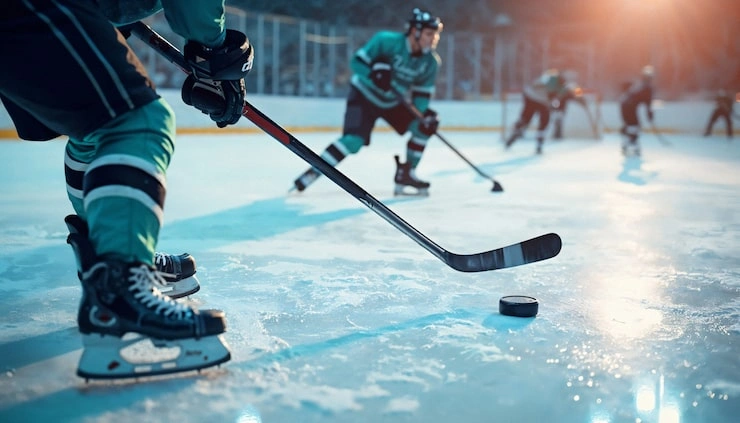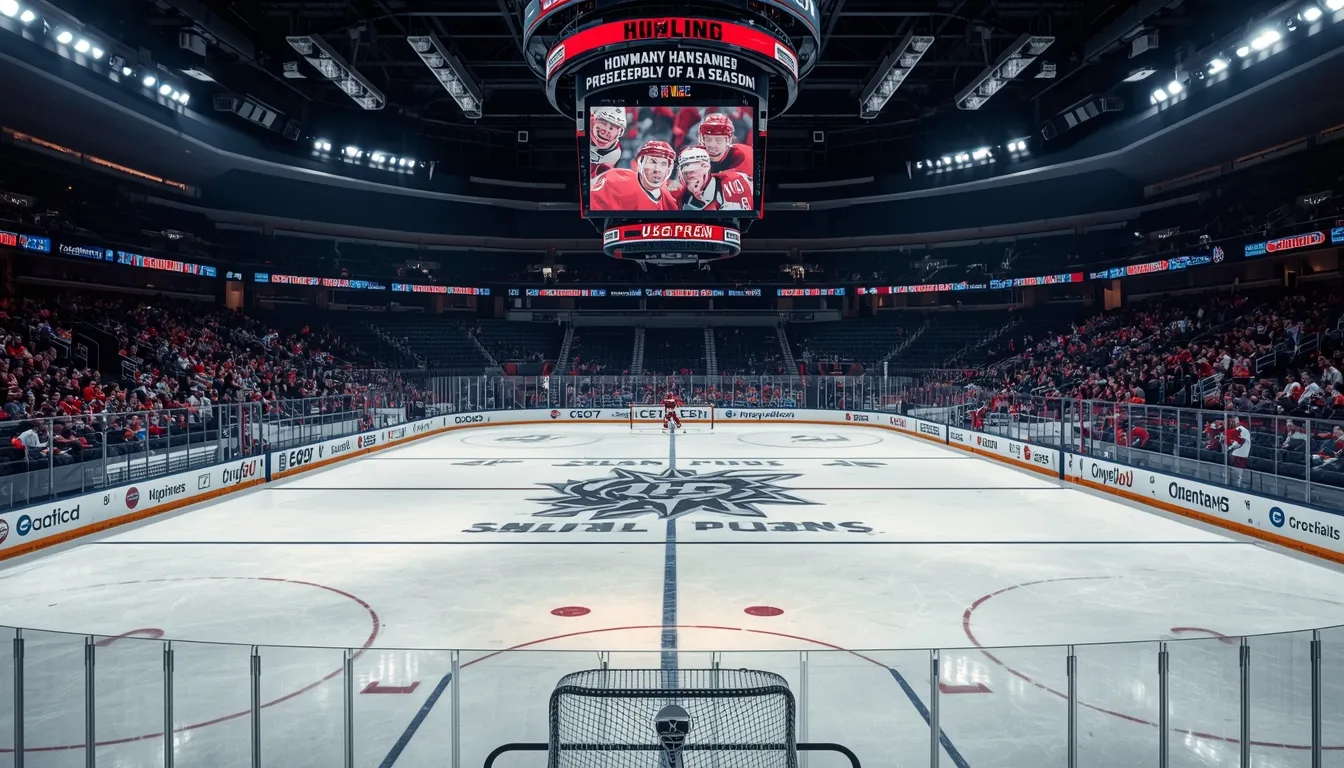
Have you ever watched a hockey game and wondered why the referee blew the whistle? Hockey is a fast and fun sport. But the rules can be a little tricky. Did you know that the rules in the United States and Canada are not exactly the same? It's true! Even though both countries love hockey, the way they play can be a little different.
In this article, we will look at the rules for USA Hockey and Hockey Canada. We will use very simple words so even a 10-year-old can understand. We will talk about things like offsides, icing, penalties, and goals. This guide will help you understand the game better whether you are watching on TV or playing on the ice. Let's dive in and learn about the usa vs canada hockey rules comparison!
The Main Groups in Charge of Hockey Rules
Before we conversation approximately the rules, it is great to know who makes them. In the Joined together States, the primary bunch for novice hockey is called USA Hockey. They make the rules for kids and youngsters playing in America. In Canada, the fundamental gather is called Hockey Canada. They do the same thing for players in Canada.
These two bunches work difficult to make the amusement secure and fun. Their run the show books are exceptionally comparative, but they have a few little contrasts. Think of it like two companions who like the same diversion but play with marginally distinctive house rules. The fundamental objective for both bunches is to make beyond any doubt everybody has a great time and remains secure on the ice. They moreover need to instruct players how to play the right way. Both USA Hockey and Hockey Canada upgrade their rules each few a long time to make the diversion better. When kids begin playing hockey, they learn the essentials from these bunches. Coaches go to uncommon classes to learn the rules so they can instruct the players. Officials moreover have to ponder difficult to know the rules for their nation. If a arbitrator from Canada worked a diversion in the US, they would require to learn the little contrasts. This appears how imperative these bunches are for hockey on both sides of the border.
Read Also: Difference Between Ice Hockey And Field Hockey
The Big Difference: Offsides
One of the greatest contrasts between USA Hockey and Hockey Canada rules is almost something called offsides. In hockey, you cannot go into the other team's zone some time recently the puck does. There is a blue line that isolates the center of the ice from the range close the other team's objective. The assaulting players have to hold up for the puck to cross this blue line some time recently they can go in.
For a long time, the shriek blew right absent if a player went in as well early. But presently, USA Hockey has a modern run the show for more seasoned kids. It is called a postponed offside or tag-up offside. This implies if a player goes in early, the play does not halt right absent. The player can skate back out and tag up by touching the blue line with their skate. At that point they can go back in and play the puck. This keeps the amusement moving and is more fun to watch.
Hockey Canada still employments the more seasoned run the show in numerous cases where the shriek blows speedier. For more youthful age bunches in Canada, if you go in early, the play stops and you have to go back to center ice for a face-off. This educates kids to pay consideration and remain onside. As players get more seasoned in Canada, a few associations utilize the tag-up run the show as well. But for numerous a long time, the standard run the show was distinctive. This appears how the two nations can have diverse ways of educating the same sport.
The Big Difference: Icing
Another enormous distinction is with a run the show called icing. Icing is when a group shoots the puck from their possess side of the ruddy line all the way down past the other team's objective line. The ruddy line is in the center of the ice. If you shoot from behind that line and the puck goes all the way down and the other group touches it to begin with, the official calls icing.
In the past, if your group was short-handed since of a punishment, you might not ice the puck. USA Hockey fair changed this run the show for more seasoned age bunches. Presently, groups that are short-handed can ice the puck. This makes a difference them get the puck out of their zone and take a breath. It too makes the diversion more secure since players do not have to race as difficult for the puck when they are tired.
Hockey Canada rules have been diverse on this for a long time. In Canada, groups that are short-handed still cannot ice the puck in numerous alliances. This implies if you have a punishment, you have to be cautious. You cannot fair shoot the puck down the ice to get a break. You have to keep playing and attempt to get the puck out of your zone without icing it. This is a key distinction to observe for if you are observing diversions from both countries.
Penalties and the Penalty Box
Penalties are called when a player breaks a run the show. Both nations have the same fundamental punishments. A minor punishment keeps going for two minutes in the punishment box. You might see a minor punishment for stumbling, snaring, or cutting. A major punishment keeps going for five minutes. These are for more genuine things like battling. In both the US and Canada, if you get a major punishment, you sit in the box for five minutes.
Some punishments are called offense punishments. These can be ten minutes long. If you get a amusement unfortunate behavior, you have to take off the diversion and go to the locker room. Both nations utilize these same sorts of punishments to keep players secure. The official puts their hand up to call the punishment and at that point tells the scorekeeper what the player did wrong.
However, the way the run the show books are composed can be a small diverse on what is a minor or major punishment in a few exceptionally particular cases. But for most youthful players, the punishments feel the same. It is too a punishment to utilize your hands to near the puck or to high-stick another player. Keep in mind, if you hit somebody with your adhere over their shoulders, you will likely go to the box. Both USA Hockey and Hockey Canada need to get freed of unsafe plays like checking from behind. They work difficult each year to make the amusement more secure for all kids.
Checking and Body Contact
Body checking is a enormous portion of hockey. This is when you utilize your body to halt the other player from moving with the puck. Both USA Hockey and Hockey Canada have rules almost when kids can begin checking. They need to make beyond any doubt players are enormous sufficient and prepared to learn this expertise safely.
In the Joined together States, checking is not permitted until players are more seasoned. USA Hockey has age bunches for distinctive levels. More youthful players play what is called non-checking hockey. They learn to skate and pass and shoot to begin with. When they get more seasoned and greater, they learn how to check the right way. Coaches educate them to keep their heads up and utilize their bear to bump the usa vs canada hockey rules comparison.
Hockey Canada too has rules around when checking begins. For numerous a long time, Canada begun checking at a more youthful age than the US. But in later a long time, both nations have moved to begin checking at around the same age. This appears how the two bunches work together to keep kids secure. They conversation to specialists and coaches to discover the best age for kids to begin learning checking. They need hockey to be fun but moreover secure for everybody who plays.
How to Score a Goal?
Scoring a objective is the best portion of hockey. The rules for a objective are nearly the same in both nations. A objective checks when the entirety puck crosses the objective line, beneath the crossbar, and between the posts. The objective line is the ruddy line on the ice right in front of the net. The puck has to totally cross this line for it to be a objective. If any portion of the puck is still on the line, it is not a goal.
You cannot kick the puck into the net. If you utilize a particular kicking movement and the puck goes in, the objective will not check. You too cannot bat the puck into the net with your hand. If you near your hand on the puck and toss it toward the net, the objective will not check. In some cases the puck can go in off a player's skate. If you do not kick it and it fair bounces off your skate, the objective is great. The official has to observe closely to see if you moved your skate to kick it or if it fair hit you.
Another cool run the show is almost helps. If you pass the puck to somebody who scores, you get an help. You can get one or indeed two helps on a objective. This implies the final two players who touched the puck some time recently the objective scorer get credit for making a difference. If the other group inadvertently puts the puck in their possess net, the objective tallies for the assaulting group. The final player on the assaulting group who touched the puck gets credit for the objective. One thing that stops a objective is if an assaulting player runs into the goalie. This is called goaltender obstructions and it makes the objective no great. The official blows the shriek and the face-off goes exterior the zone.
Goalies Have Special Rules Too
Goalies have a exceptionally difficult work so they have their possess extraordinary rules. In both the US and Canada, goalies cannot play the puck all over. There is a extraordinary region behind the net molded like a trapezoid. This is a shape with four sides where two sides are parallel. The goalie can as it were play the puck interior this zone behind the net. If they play it exterior the trapezoid, they get a minor punishment. This run the show stops goalies from being as well great at moving the puck and makes the amusement more energizing for everyone.
Another huge run the show is that you cannot touch the goalie. If a player runs into the goalie on reason, they will get a punishment. Now and then a player crashes into the goalie by mishap and that can too be a punishment. The goalie has a uncommon zone in front of the net called the wrinkle. This is the blue painted region right in front of the objective. Players are not assumed to stand in the wrinkle, particularly when a objective is being scored. If an assaulting player is standing in the wrinkle and the puck goes in, the objective might not count.
Sometimes a objective is scored but the net comes off its moorings. The moorings are the small pegs that hold the net in put on the ice. If the net is off, a objective cannot number. The arbitrator will blow the shriek and halt the play. They will have a face-off exterior the zone. Goalies can too solidify the puck. This implies they cover it with their glove or blocker to halt the play. This gives their group a break and a chance to alter players on the ice.
Game Length and Overtime
The length of hockey diversions can be diverse depending on how ancient the players are. In both the US and Canada, more youthful kids play shorter recreations. They might play three periods that are ten or twelve minutes long. This is since they are still learning and get tired quicker. More seasoned kids play longer recreations. Tall school players might play fifteen diminutive periods. College and professional players play twenty diminutive periods.
If the amusement is tied at the conclusion of the third period, a few diversions go into extra time. Extra time is additional time to choose who wins. In numerous youth associations, additional time is sudden passing. This implies the to begin with group to score wins the amusement right absent. A few associations play a full additional time period. Others play a shorter extra time like five minutes. If no one scores in extra time, a few recreations conclusion in a tie. Other diversions go to a shootout where players take turns attempting to score on the goalie one on one.
Both USA Hockey and Hockey Canada have rules almost additional time for their competitions and championships. Now and then they play a full twenty diminutive period of sudden passing extra time. Other times they play shorter overtimes. The rules can too alter for playoff recreations where it is exceptionally critical to have a victor. The fundamental objective is to make beyond any doubt the amusement is reasonable and energizing for the players and the fans observing in the stands.
You May Also Like: Canada vs USA Hockey Score 2026: Full Match Result Update
Equipment Rules and Safety
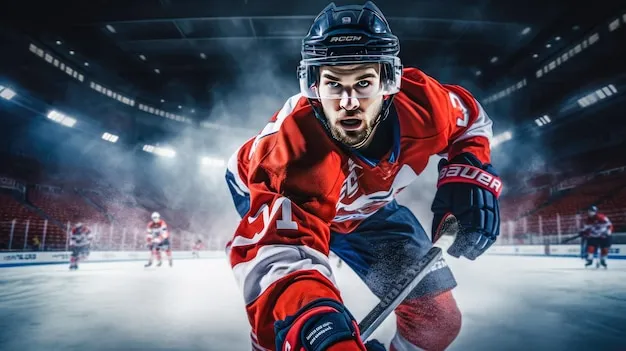
Safety is exceptionally imperative in hockey. Both USA Hockey and Hockey Canada have rules approximately what hardware players must wear. Each player has to wear a head protector with a cage or shield on the front. The cage secures your confront from pucks and sticks. Goalies wear extraordinary veils that cover their entire confront. All head protectors have to fit right and be strapped on tight. Players too have to wear bear cushions, elbow cushions, gloves, and shin watches. These secure your body from falls and hits. Hockey pants are uncommon pants that have cushioning interior to ensure your hips and tailbone. Skates have to fit well and be tied tight so you can skate quick and halt speedy. The skate edges have to be sharp so you can turn without falling.
Both nations make beyond any doubt that all hardware meets security measures. This implies the hardware has been tried to make beyond any doubt it works. If gear is as well ancient or broken, players have to get unused stuff. Mouth watches are too imperative. A few alliances say you have to wear a mouth watch to secure your teeth. Neck watches are getting to be more prevalent as well. These ensure your neck from skate edges. Both USA Hockey and Hockey Canada need all players to wear the right equip so they can have fun and remain safe.
Frequently Asked Questions
Why do USA and Canada have different hockey rules if they both play the same sport?
The two nations have diverse bunches that run their hockey programs. USA Hockey and Hockey Canada are both attempting to do what is best for their players. Now and then they attempt modern rules to see if they work superior. They too conversation to each other and share thoughts. When one nation finds a run the show that makes the diversion superior or more secure, the other nation might begin utilizing it as well. This is why a few rules are the same and a few are a small distinctive. They both need the same thing which is to offer assistance kids adore hockey and play it the right way.
What is the hardest rule for new hockey players to learn?
Many youthful players think the offside run the show is the hardest to learn. When you are skating quick and the puck is moving, it can be difficult to hold up at the blue line. You need to go get the puck but you have to hold up for it to come in to begin with. The icing run the show can too be befuddling since you have to know where the ruddy line is and when you can shoot the puck down the ice. But after a few recreations, most kids begin to get it these rules. Coaches offer assistance by hollering from the seat to remind players to remain onside or to not ice the puck.
Do the rules change as players get older?
Yes, the rules alter a part as players get more seasoned. Youthful kids play with littler ice surfaces and some of the time no goalies at to begin with. As they get more seasoned, the ice gets greater and they include more rules. Checking is not permitted until players are more seasoned and prepared. The punishment times can get longer for more seasoned players as well. The offside and icing rules might alter when players move up to higher age bunches. This is called dynamic learning where kids learn a small bit at a time. It makes a difference them get it the amusement without getting as well befuddled at the start.
Wrapping It All Up
Hockey is a brilliant don that brings bliss to millions of kids in the Joined together States and Canada. The rules might be a small diverse between the two nations but the cherish for the diversion is the same. Whether you are playing in a little arena in Minnesota or a huge field in Toronto, the objective is to have fun, work with your partners, and play fair. When you observe a hockey amusement presently, you can see for a few of these run the show contrasts. See if the players tag up on offsides or if the shriek blows right absent. Observe to see if a group on a punishment can ice the puck. These little things make each diversion curiously and appear how hockey is continuously changing to get better.